How it works
To learn how to windsurf we would recommend taking a course lasting around 10 hours over several days. Each centre differs with the courses they offer. Beginner courses vary from as little as 2 hours, which only covers the very basics, and will only just leave you able to practice on your own, to comprehensive 10-hour courses which are perfect for ensuring you are completely independent and having fun. You will also have a lot more structure to your learning by taking a long course as a structured plan will already be written. With this we would also recommend equipment usage hours, which usually come with the course, giving you an average of one hour of practice for every hour of instruction.
Learning to windsurf involves being taught both the physical and practical parts of windsurfing. The physical section is learning to be in control of the board and rig (sail), and to understand how to make your windsurf kit respond in the way you want it to. On the theory side, you will learn about the wind, conditions, and choosing the right equipment. You will cover how to increase and decrease your power and speed using the correlation between the direction you are sailing in and the direction of the wind. In this section, any previous wind sport experience will rapidly speed up your understanding, and awareness of which direction the wind is blowing from.
What you will learn
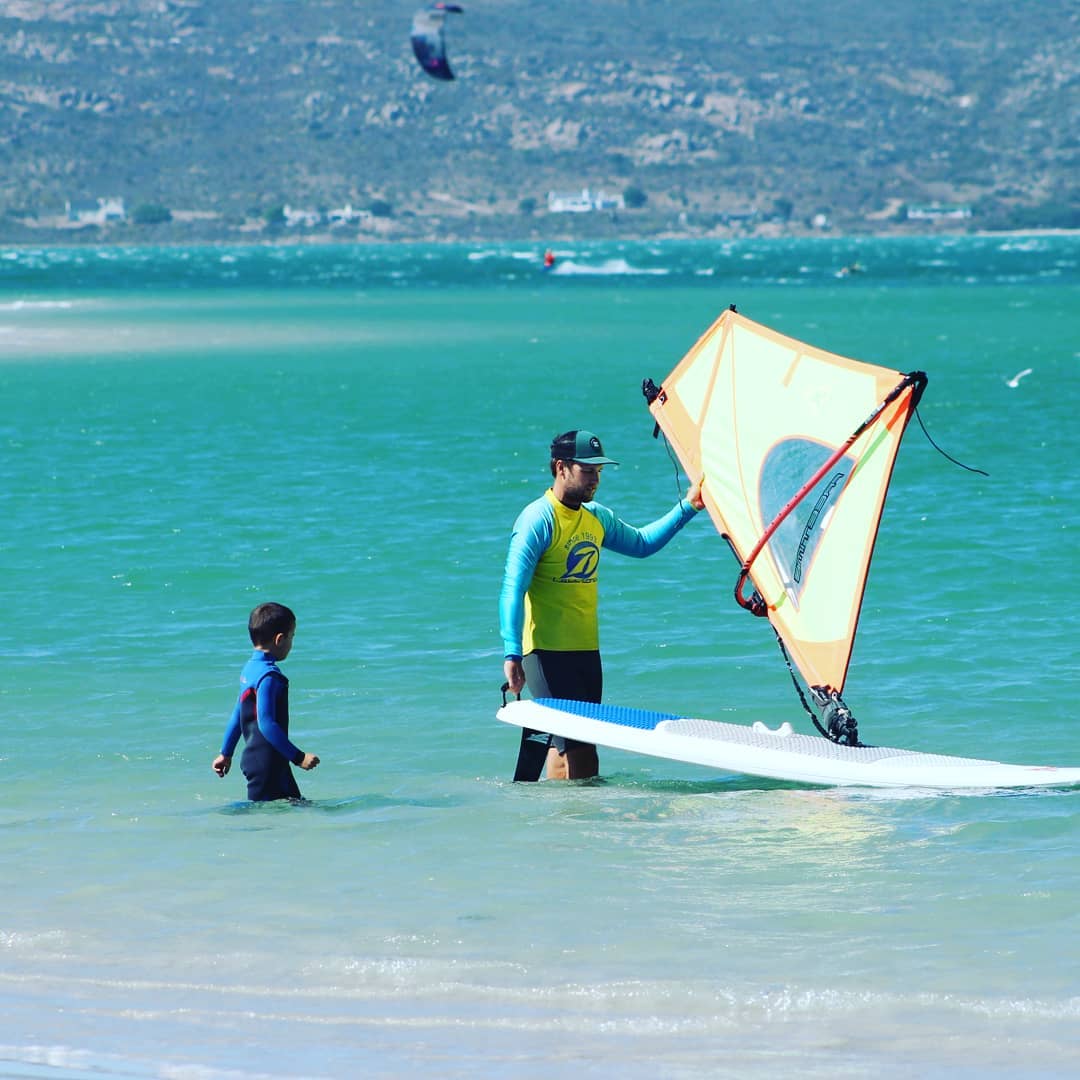
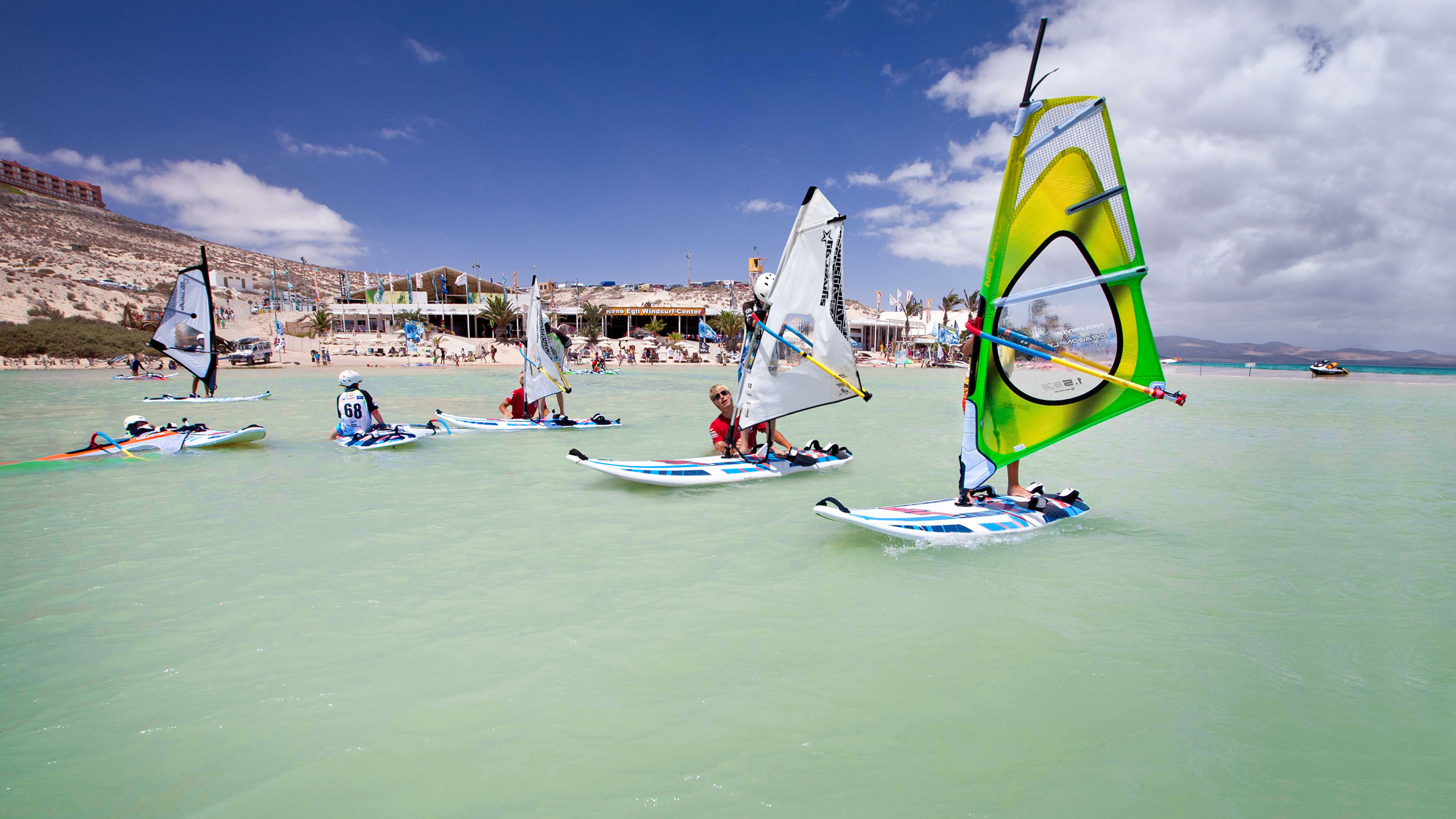
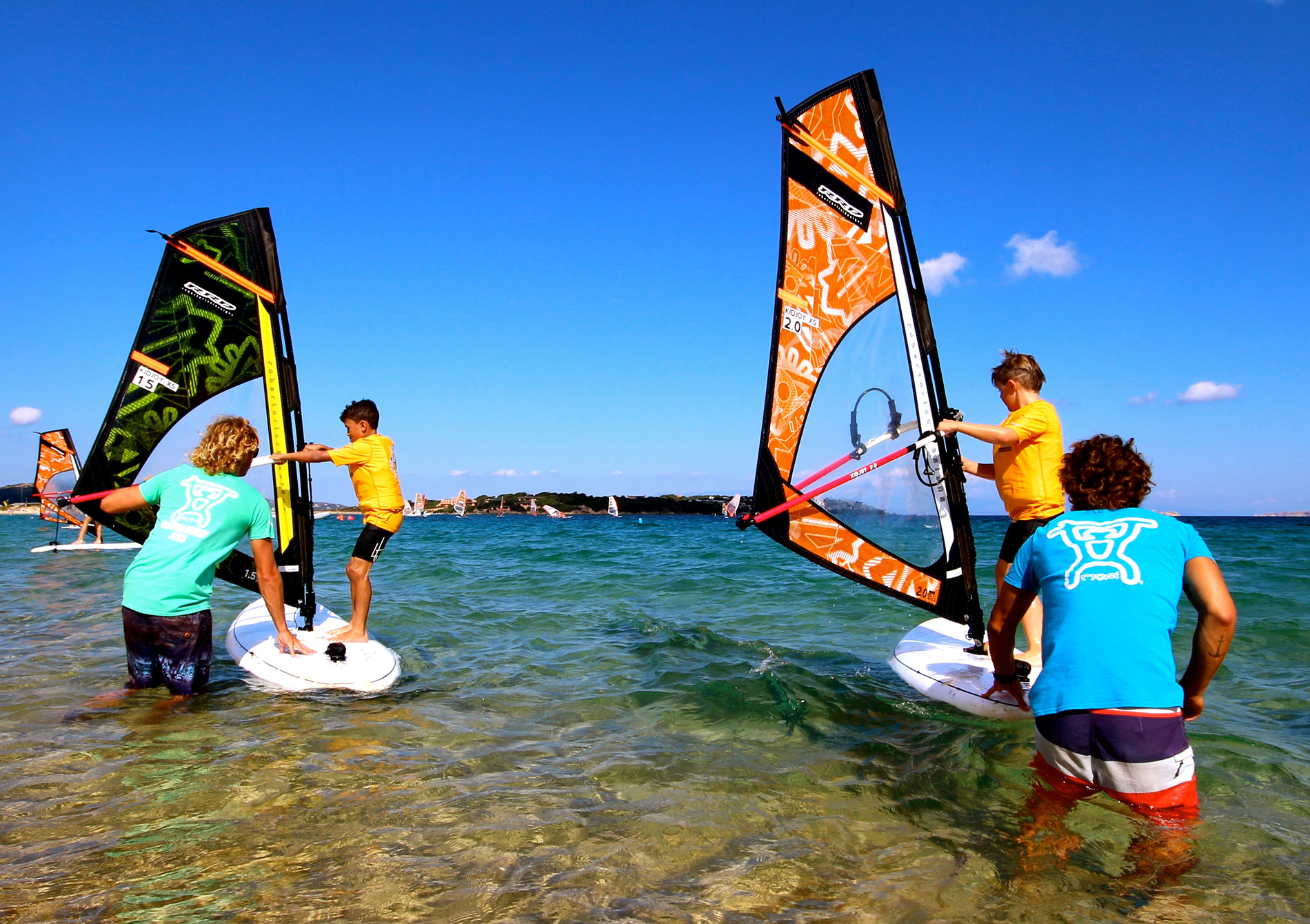
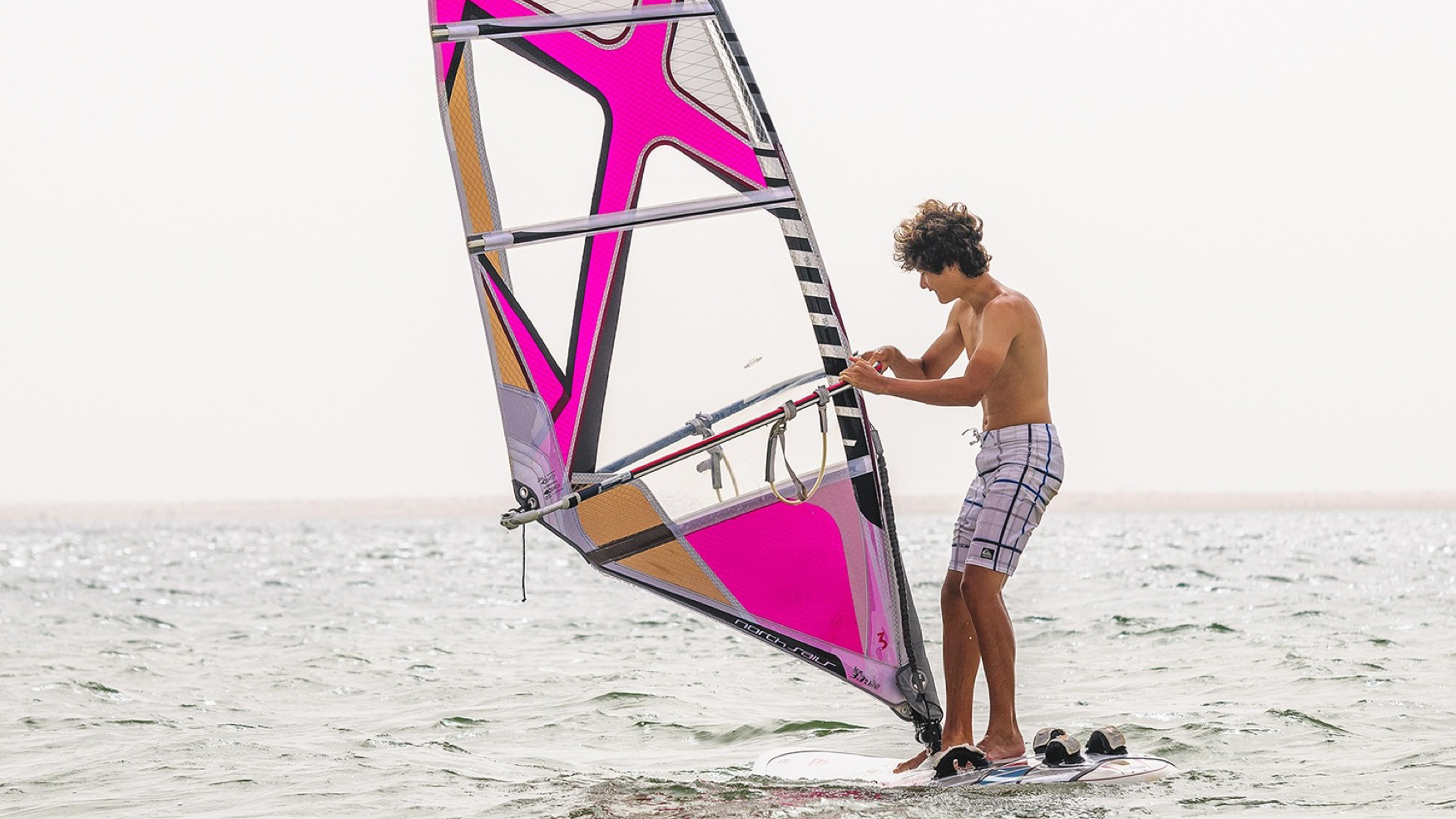
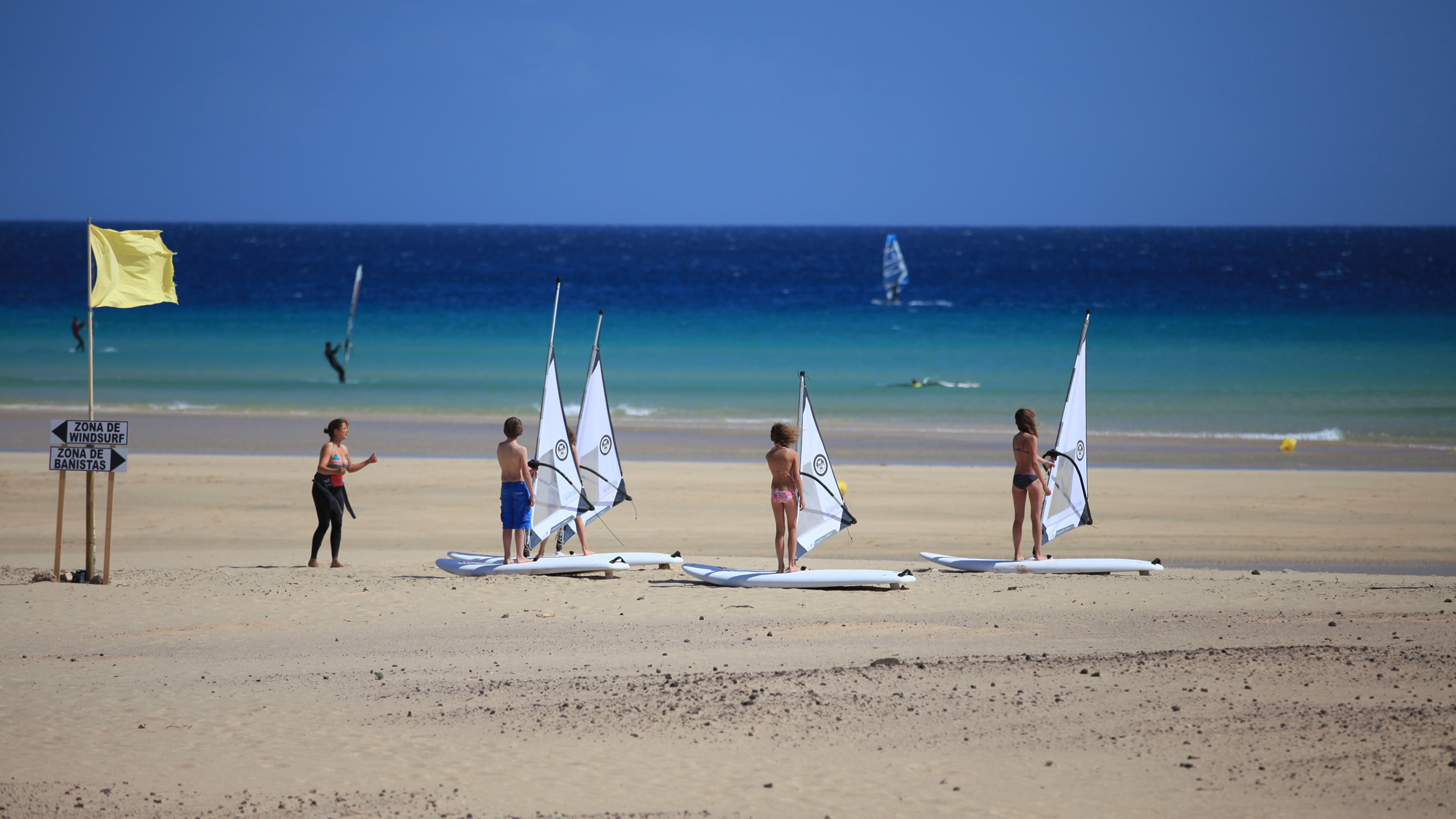
Your first lesson would begin with the instructor spending the first 10-20 minutes on land with you. Most centers use an old windsurf board and sail as a simulator, which they use to show you the basics of windsurfing, how to get on the board when in the water, stance, and how to perform a simple turn called a ‘tack’. After that, it’s straight on to the water to practice what you have learned, with the instructor's guidance. This is one of the best things about learning to windsurf as opposed to other wind orientated sports, you are up on the board and having fun within the first 30 minutes.
After your first 3 hours, you should have gained a really good understanding of windsurfing and the factors that affect it. A few hours of solo practice is now recommended to sharpen your new skills and get you ready for the next step.
If you are feeling confident by your next lesson, you can discuss with your instructor about learning to beach start and harness. Beach starting enables you to step on your board and sail away from the shoreline, which is crucial for when you begin to sail in areas with shore break (waves that break on the beach). The harness is what helps you to sail in stronger winds. Your instructor will show you how to wear the harness, hook in and out, how to use it safely and the new stance you need to adopt.